Despite its reputation, this procedure is actually used to relieve pain, not cause it. Simply put, it’s a minimally invasive, nonsurgical way to remove infected tissue from inside your tooth in order to protect your mouth and your overall health. Successful root canal therapy could mean the difference between keeping a natural tooth and needing to replace it. Call Worcester Endodontics today to set up a consultation if you have a damaged or hurting tooth that needs pain-relieving root canal therapy in Worcester, MA right away.


You may have an infection that requires root canal therapy if:
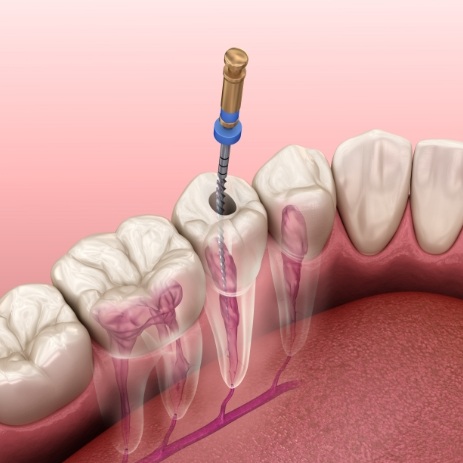
Root canal therapy is completed in one to three visits. The area around the tooth will be numbed with a local anesthetic. Then we’ll create an opening in the tooth in order to remove the pulp inside. We’ll then need to clean the inside of the tooth (including the various root canals) in order to make sure that the infection is completely gone. Afterwards, the tooth will be filled with a biocompatible material and sealed. We may suggest a crown for added strength and protection as well.

During the next few days, you can take any medication that has been prescribed to you to manage your discomfort. Plan to eat softer foods at first, and only chew with the side of the mouth that didn’t receive treatment. You can brush your teeth normally, but you’ll have to be gentle with the treated tooth. You can expect the pain to fade after a few days; if it does not, call our endodontic office immediately.

Since there are lots of rumors surrounding root canals, it’s not surprising that patients have lots of questions about them. Can I take antibiotics instead? What happens if I wait too long to get treatment? Is there something I can do to prevent it? You can find out the answer to all of these questions and more right here.
In large part, yes. While genetics do play a role, there are a multitude of best practices you can implement to help keep your teeth happy, healthy, and decay-free. A few important ones include brushing for a full two minutes twice a day, flossing daily, and rinsing with mouthwash regularly. It’s also a good idea to keep your consumption of sugar to a minimum, get a dental checkup and cleaning biannually, and stick to mostly well-balanced, nutrient-dense meals.
No. Antibiotics work by traveling through your bloodstream to the infected areas of your body. Since the bloodstream doesn’t reach the pulp of your tooth, antibiotics aren’t effective alone. To treat the infection and restore your oral health, your Worcester dentist will need to conduct root canal therapy or extract your tooth.
Postponing treatment will only delay the inevitable. It may, in fact, allow the root of the problem to progress, negatively impacting the health of your surrounding teeth and gums. At this point, a tooth extraction might be the only option. That’s why it’s so important to schedule your root canal therapy when your dentist first recommends it. It will stop the infection in its tracks, restore your bite, and allow you to enjoy a pain-free smile once more. Remember, even though root canal therapy may sound like bad news, it’s ultimately good news because it means your tooth can be saved!
If your once painful toothache has subsided, don’t celebrate just yet. The change in your symptoms may be the result of the infection “killing” the nerve of your tooth. Although this may ease your discomfort, it’s ultimately a sign that the infection has progressed. So, it’s still a good idea to talk to your dentist about your treatment options. If a root canal in Worcester is still possible, we’ll get to work on saving your tooth. If a tooth extraction is now needed, we will create a new treatment plan with the goal of restoring your smile, bite, and oral health.
That depends! If you’re being sedated, then you may be asked to fast to avoid feeling nauseous. If you aren’t, then it’s a good idea to eat a filling, well-balanced meal a few hours before your appointment. Make sure to avoid alcohol and unhealthy dental habits, like smoking, as well.